Overview
I joined SunFuel Electric in its early days, driven by a vision to make electric vehicle (EV) travel worry-free across all of India. We knew that achieving this freedom required a reliable and accessible EV charging infrastructure. What started off as a summer internship turned into an extended journey of building a product that is now live in 100+ luxury locations across India.

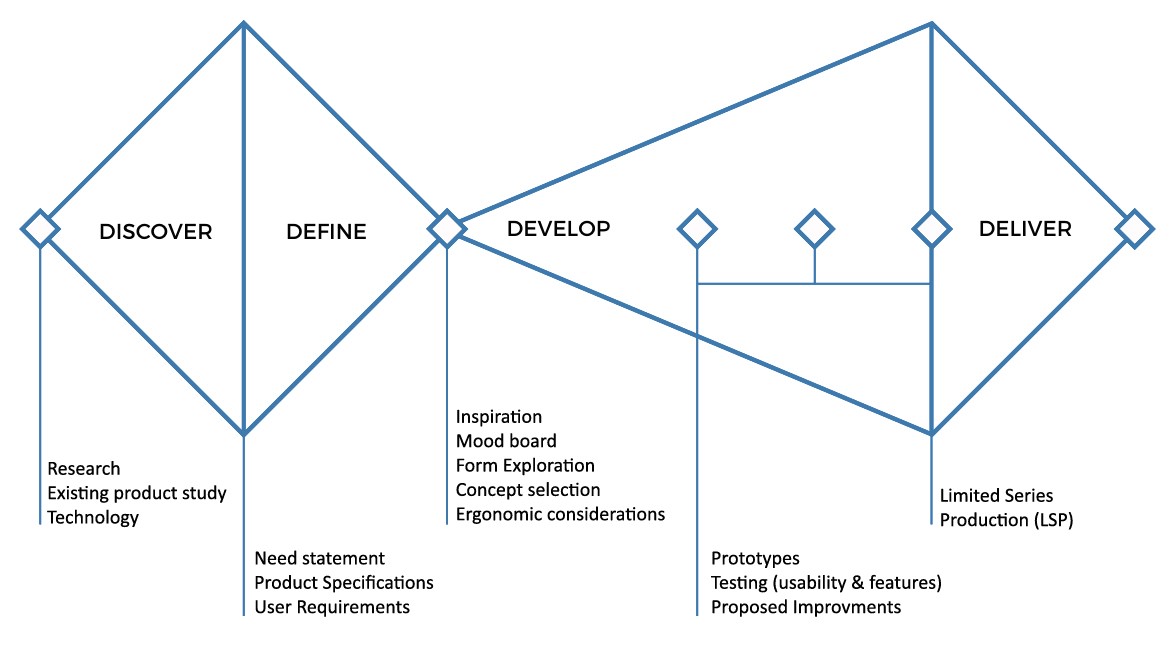
Acknowledging the why
Electric mobility has proved to be a reliable and cost-effective mode of transport in recent years. This was made possible with technological improvements in battery technology, range, fast charging and much more. And inspite of having relatively lower range compared to an Internal Combustion (IC) vehicle, it is still practical to rely on a full battery that was charged overnight to handle all intracity travels for that day. To speed up the adoption rate, a charging infrastructure is key. This addresses range anxiety, which is the fear of having insufficient range to reach a destination. With the presence well-established charging networks across areas with high footfall, users will not have to think twice about purchasing an Electric Vehicle (EV).

Current Technological Landscape
Understanding charging speeds
Level 1: These chargers come with the car and plug into a standard 16A household socket. They supply AC power, which the car converts to DC internally for charging.
Level 2: Powered by a 32A industrial socket, these include home wall boxes and public chargers (7.4kWh to 22kWh). Ideal for faster charging at homes, malls, and residential areas.
Level 3: High-powered DC fast chargers, typically installed on highways (50kWh to 350kWh output). They require significant infrastructure and are meant for quick top-ups during long trips.
Charging Standards in india for 4 wheelers (by bIS and DHI)
AC Charging (Moderate charging speed)
Connector Type
AC Type-2 (IEC 62196-2) — adopted under IS 17017-2-2
Power Output
Up to 22 kW (3-phase)
Use Case
Fleet vehicles, commercial cars, taxi aggregators
DC Charging (Fast charging speed)
Connector Type
CCS2 (Combined Charging System) — IS 17017-2-3
Power Output
Typically 30–150 kW, scalable to 350 kW
Use Case
Primary fast-charging standard for commercial cars, taxis, vans, buses
Competitor analysis
The study focused on EV charging solutions in India and abroad, examining their features, design choices, and user feedback. This helped identify best practices and common challenges to inform the development of a more user-centric charger.
View competitor analysis on FigJam

What Early Adopters Are Saying
"I don't always find reliable stations. It adds to my anxiety that some stations may be occupied or not working when I reach the premise."
-A frequent EV traveller

Why focus on City & Destination Charging?
According to data collected by Pod Point on EV owners in the UK, charging patterns show that 60% of charging occurs at home, 30% within the city, 7% at destinations outside the city, and only 3% on highways. In India, where EV infrastructure is still in its early stages, it is reasonable to assume that an even greater percentage—over 60%—of charging takes place at home, or at the office if designated charging spots are available. This level of access is generally sufficient for most intra-city travel. However, developing a large city-wide charging infrastructure is essential. It allows users to conveniently top up their vehicles at frequently visited locations, whether for short or extended durations. This not only reduces range anxiety but also supports faster adoption of electric vehicles.

Defining Customer Requirements

Cable Reach
Length based on the orientation of car and location of the charging port.

Status Communicator
Visual or audio feedback to show charger connection, payment status, and faults.

Cable Management
Long cables are hard to coil and users may avoid due to cleanliness and cable stress.

Payment System
Supports app wallet, UPI, RFID, and cards. UPI is ideal for users without RFID.

Quick Operation
Fewer steps make it easier and faster to use the charger.

Internet Connectivity
Needs Ethernet, Wi-Fi, or GSM for remote access; Ethernet is most reliable.

Weatherproof
Should be IP-rated and built with tough panels for outdoor use.

Single Hand Operation
Charging should be possible with one hand, even when the other is occupied.

Ambient Lighting
Needs built-in or nearby lighting to be visible in low-light conditions.

Ease Of Installation
Should include a drill template and simple connections for easy setup.

Modular Design
Components should be easily replaceable without dismounting the charger.

Easy To Maintain
Minimize panel gaps and use dust-resistant materials for easy cleaning.
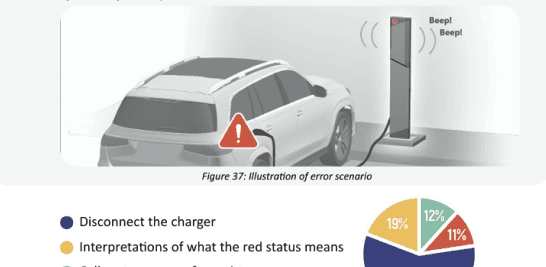
Survey: Emergency response
The goal was to understand people’s immediate reaction and response to certain emergency situations at charging stations. Since most participants lacked hands-on experience with EVs and charging stations, each scenario was visually and practically exaggerated to help them better visualize themselves in such situations.
View competitor analysis on FigJam
Design Phase
Moodboard & Inspiration
The form and style was inspired by the iconic Monolith structure from the film- 2001: A Space Odyssey. The tall, grandeur structure is a timeless monumental piece. The ideology of SunFuel resonates with the same vision to create a product at the intersection of modern technology and liberal arts.


Form Exploration
It was an exciting challenge to distil the design into a minimalistic form that offered a clear functional advantage over competitors. The process began by identifying the essential and optional user-charger communication (like status, charging rate, type of connection, etc.), which played a key role in maintaining a clean and uncluttered appearance.


The form underwent several rounds of refinement, guided by ergonomic considerations and the dimensions and layout of internal components. These iterations were tested using virtual reality staging in Gravity Sketch, which significantly reduced prototyping costs and accelerated the design process.

Ergonomic Considerations
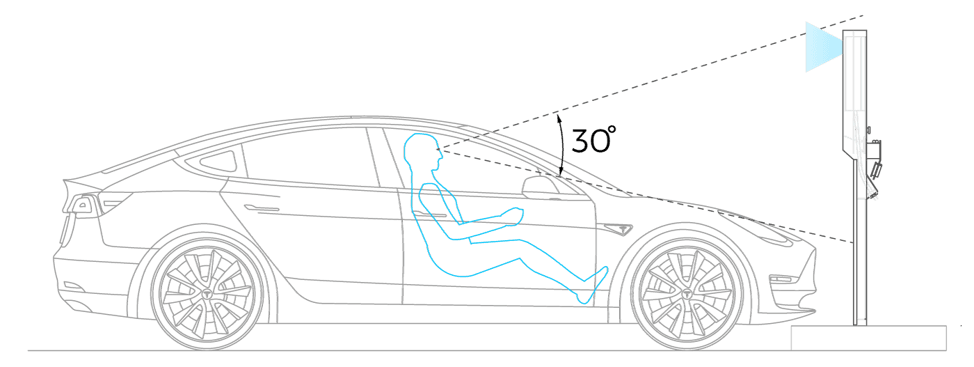
Status Beacon
The status beacon is the primary mode of communication to the user. Optimal height was assessed considering in-car visibility (not essential due to dashboard info), use of distinct colors, and lighting patterns like blinking or static signals.
User Interaction Panel
The RFID and app QR code are placed at 1340mm, near the eye level of a 5th percentile female. The RFID is positioned near the side edge to allow space to hold the card against the sensor with space to for fingers below.

Nozzle Height and Angle
The EV charger uses a pistol grip with a 135° angle between the nozzle and handle (IEC 62196-2). The nozzle is docked at 930mm, matching the 95th percentile male elbow height in India, ensuring comfortable use for both tall and short users.

Instructions
Instructions are placed between the 25th percentile female and 95th percentile male eye levels. A 13° head tilt allows both extremes to comfortably view the midpoint of the instruction board.
Cable Management
Most EV chargers have long cables to accommodate various parking orientations, unlike systems like Tesla’s that require specific alignment. However, stiff cables are hard to coil and often left on the ground, collecting dirt and water—discouraging proper storage by the next user. For sites with unclean surfaces, automatic retraction systems are ideal. While drum reels add bulk, a retractable string system is a compact alternative, as pioneered by ChargePoint Inc.

For manual cable coiling, placing the saddle and cable exit at the rear of the charger is more effective. Unlike a front exit, which can obstruct the parking spot and require users to move the cable before parking, a rear exit prevents the cable from falling into the vehicle path.
Survey: User associations with colour and signals
Given the charger's minimal design, all status communication is conveyed through a single status beacon. The survey had participants from India, segregated based on age and gender. Prior experience with EVs or chargers was not required, as the goal was to understand the color and signal expectations for various charger statuses.
View Suvey Insights FigJam

Building The First Prototype
The first prototype of Monolith was built to understand:
Mechanical constraints of sheet metal bending and component assembly
IP rating of the sheet metal enclosure
Accessibility of internals for maintenance and servicing
Visibility and sizing of panel gaps
Performance of different lighting assemblies
First-time user interactions with the charger
Physical scale and presence of the product


The main frame of the charger is made from MS rectangular hollow section 60x40x4.5. The front panels A & B were made from Cold Rolled Close Annealed (CRCA) Steel.
Observation #01
The rear side has many surface levels which becomes a hot-spot for dirt and water to collect.
Improvements
Panels added to level the entire rear side in line with the frame.

Observations #02
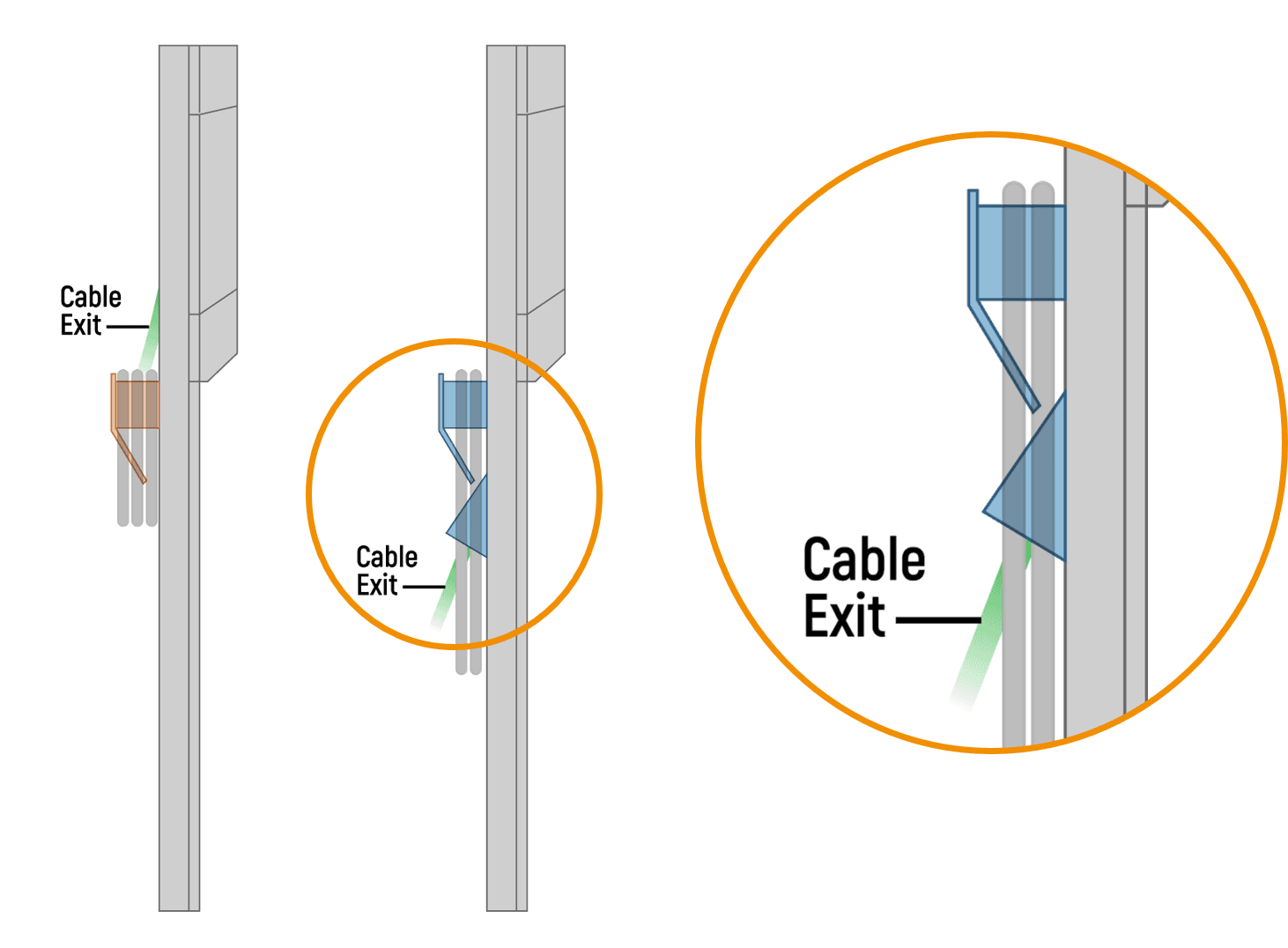
Users would loop the cable tightly around the saddle.
Improvements
Cable exit is positioned below the saddle pointing outward to restricting that space.
Observations #03
Users would loop the cable tightly around the saddle.
Improvements
Cable exit is positioned below the saddle pointing outward to restricting that space.
Second Round

This prototype was made completely functional to test the entire process of operating the charger. The two ways of starting a charging session is through the app or by tapping the authenticated RFID card.
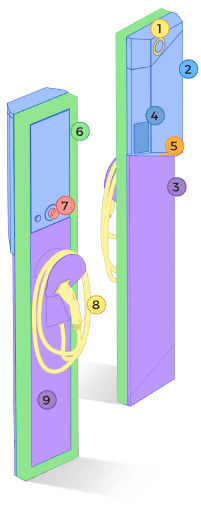
Front center panel in slate grey powder coat, with top and bottom claddings in a darker shade for subtle color variation.
User Interaction Study
The prototype was temporarily installed in a parking spot beside an ICE vehicle fitted with a dummy EV socket. For remote testing, three cameras were set up. Five users—none with prior EV or charger experience—were asked to handle the charging cable, scan the QR code, plug in the charger, and return it. The goal was to assess the system's intuitiveness for first-time users.

What Worked ✔️
The cable exit design change had successfully nudged the users to loop the cable with a larger radius after use. Cable does not fall out in front of the charger when not in use.
What Didn't Worked ❌
The stiffness (loop tension) in the cable makes it hard for the user to loop it on the saddle. Some users also left the cable on the ground after multiple failed attempts to keep it on the saddle.
Users did not show any signs of urgency when prompted to push the e-stop button.
General Observations
Once the charging session is completed, users pull all the cable to the back of the charger before coiling it. Even users who did not coil it back on the saddle wanted to keep the cable off the ground so that it does not get 2 caught in the wheel.
Minimum distance of charger to the edge of the footpath should be such that they have sufficient space to scan the QR while standing on the 3 footpath.
Having an adjacent car would cause trouble to take the nozzle to the car because users tend to stretch and pull the cable forward as they go.
CMF


Final Output: Limited Series Production

Way Forward
Station Environment
Building a charging infrastructure involves significant expenses related to the installation and commissioning of charging stations. This includes routing power lines, establishing internet connectivity, and laying concrete foundations. Once these prerequisites are in place, additional guidelines must be followed to ensure the long-term sustainability and performance of the stations.

Parking Layout Guidelines
A site survey is essential before installation. A minimum clearance radius of 620mm is required on three sides, based on the body breadth of a 95th percentile male. Installations should avoid areas prone to water clogging or near pipelines. Shaded locations are ideal for longevity, though the charger is designed to endure extreme temperatures from -25°C to 55°C.

View all parking layouts on FigJam

What I learned
The iterative process highlighted the importance of thorough planning before prototyping, while also turning mistakes into valuable lessons that better prepared us for the next stages of development.
All of this was made possible through the collective effort of a passionate, ambitious team committed to disrupting the landscape and consistently placing the user at the heart of every product and service decision.

UP NEXT